How Faridabad Manufacturers Can Use Branding to Win More B2B Tenders
Faridabad manufacturers lose B2B tenders not because their product is inferior, but because their brand presentation signals less credibility than the competitor who wins.
A professionally designed logo system, a company profile that communicates capability clearly, and a consistent visual identity across documentation and exhibition materials are not aesthetic choices they are commercial ones. They determine whether a serious buyer takes the first meeting
This is a pattern First Branding Agency sees repeatedly across Faridabad’s industrial corridor. Strong engineering, real capacity, competitive pricing and a company profile built in Microsoft Word that loses to a weaker competitor who looked more credible on paper.
Why B2B Buyers Judge Manufacturers on Presentation
A procurement officer or distributor evaluating a new supplier rarely visits the factory in the first round. Their initial assessment happens through what they can see: the company profile, the website, the logo on the email signature, the catalogue. These materials answer one silent question before a conversation begins: is this a business organised enough to be a reliable partner?
Visual inconsistency mismatched logos, low-resolution files, a company profile that uses three different fonts doesn’t signal “small but good.” It signals “disorganised.” And in B2B purchasing, disorganisation is a risk no buyer wants to absorb.
A manufacturer with genuinely excellent quality but poor visual presentation is asking buyers to look past their first impression. Most buyers don’t.
Professional presentation communicates three things a buyer needs to believe before proceeding:
- The business has internal standards
- The business invests in how it represents itself
- The business is likely to apply the same standards to the product and the relationship
What B2B Branding Actually Requires for a Manufacturer
A Logo That Works Across Industrial Contexts
Manufacturing logos appear in places consumer logos never do: machinery decals, safety documentation, export certificates, exhibition standees 3 metres wide, and embossed letterhead for correspondence with international buyers. The logo needs to:
- Work in single colour and black and white many industrial applications strip colour out entirely
- Scale without losing legibility from a 15mm label to a 3-metre banner
- Communicate precision and stability not trends, not playfulness
- Avoid design choices that date quickly a manufacturing logo is built for ten years, not for the current design cycle
Most manufacturing companies in Faridabad have a logo that was created once, years ago, and has been stretched, recoloured, and reproduced inconsistently ever since. Each inconsistency is small. Collectively, they signal a company that doesn’t have its house in order.
A Company Profile That Sells Before You Speak
The company profile is the most important brand touchpoint a manufacturer has in the B2B sales process. It arrives before the meeting. It sits with the buyer while they evaluate other options. A company profile that works for an industrial business covers:
- 1. A clear capabilities statement what the business manufactures, at what precision, at what volume, with what certifications. Written for a buyer who doesn’t know you yet, not for someone who already does.
- 2. Facility and equipment overview specific, not generic. “State-of-the-art machinery” tells a buyer nothing. “Five-axis CNC machining with ±0.005mm tolerance, ISO 9001:2015 certified” tells them whether you can hold the specification they need.
- 3. Industry and application context the sectors and OEMs you’ve supplied to, without breaching client confidentiality.
- 4. Quality documentation summary certifications, testing processes, inspection capability.
- 5. Contact and commercial structure who to speak to, how to engage, MOQ or contract structure context where relevant.
All of this information needs to be presented in a designed document not a Word file. The design signals that the business takes external presentation seriously. It sets an expectation about the quality of what follows.
Colour and Typography Documented for Consistent Reproduction
Every time a vendor, printer, exhibition designer, or marketing supplier produces something on your behalf, they use whatever brand file you’ve given them. If that file is a low-resolution JPG and a verbal description of “our colour is blue,” the output will be inconsistent every single time.
Documented brand standards for a manufacturer should include:
- Exact colour values: Hex for screen, CMYK for print, Pantone for matched reproduction
- Typography: the typefaces used across stationery, documents, and signage
- Logo variants: full colour, single colour, reversed (white on dark), and minimum size specification
Two Faridabad Manufacturers Who Got This Right
San Aero Aerospace Precision, Global Credibility
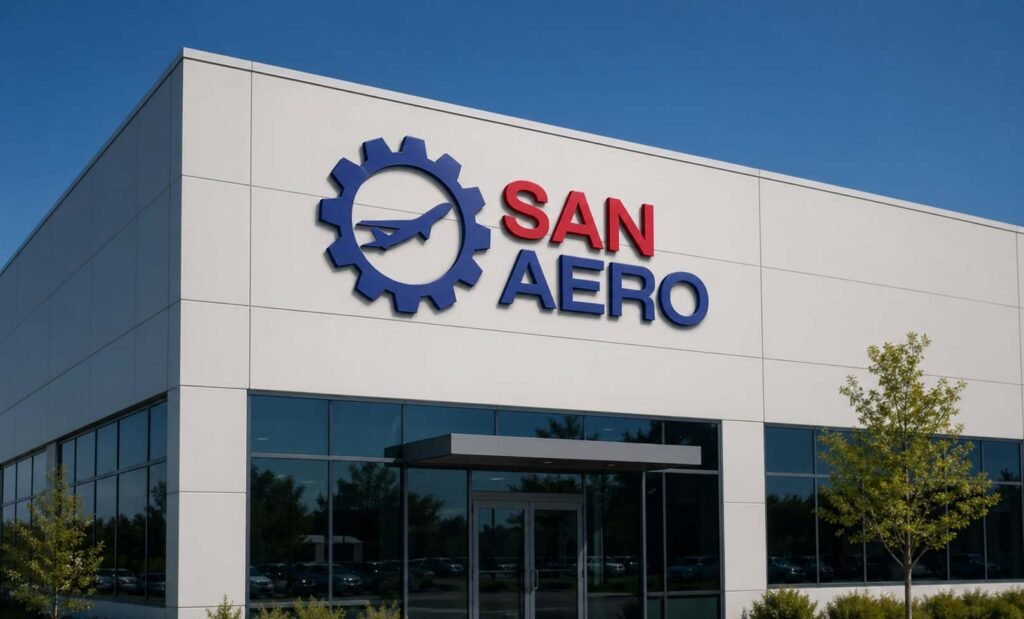
San Aero is a Faridabad-based aerospace manufacturer based at Sector 69, IMT Faridabad, Haryana 121004. The company has over 35 years of engineering expertise and generates more than 80% of its revenue from export markets supplying precision-machined components to global OEMs across aerospace, oil and gas, and mining sectors.
The challenge San Aero brought to First Branding Agency was specific: their visual identity hadn’t kept pace with the company’s growth and global reach. A manufacturer operating at this level exporting to aerospace OEMs worldwide needed a brand that communicated precision, trust, and technical excellence without having to explain it in every meeting.
What was built: A complete corporate identity a clean, engineered logo system built around the values of precision and reliability, with a supporting colour system, typography, and brand guidelines that work across stationery, packaging, trade presentations, and export documentation.
| “The new identity came out really functional. We are able to use it across different corporate identities and marketing materials. All senior executives loved it and we are planning to use it for events and physical hoardings.” San Aero Leadership Team, Faridabad |
The identity didn’t change what San Aero manufactured. It changed what international buyers saw when they encountered the company for the first time and that difference is commercial.
GD Engineers Industrial Equipment, Professional Presence
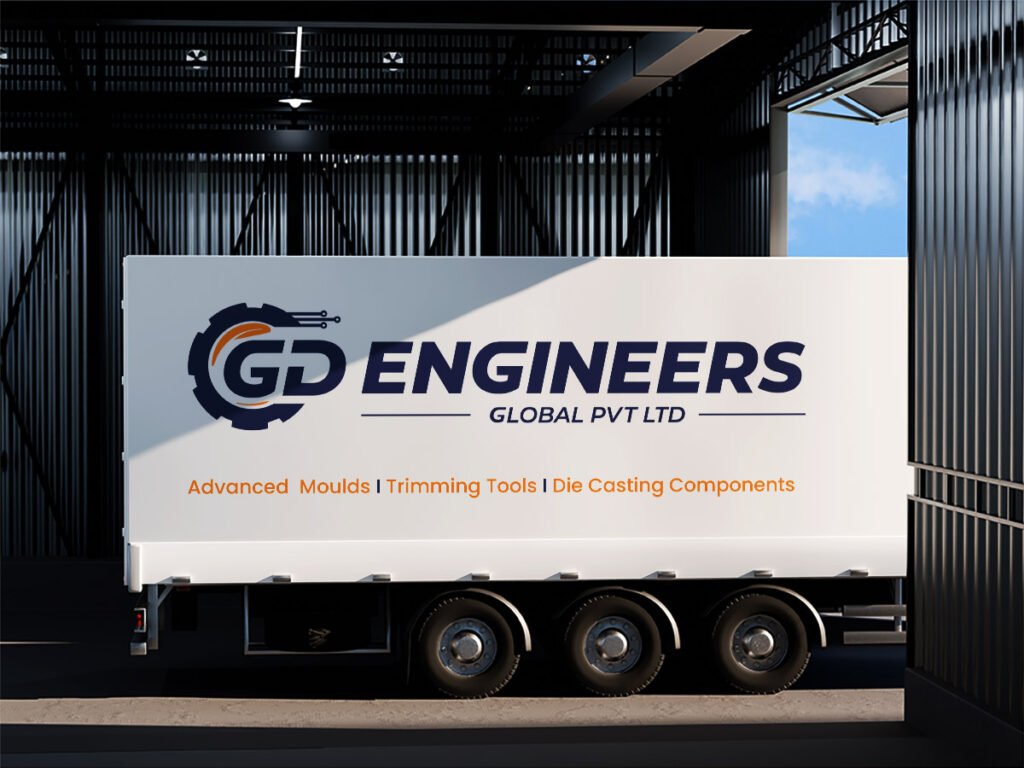
The pattern is consistent across both engagements: a manufacturer with genuine product capability needed a brand identity that communicated that capability to buyers who couldn’t verify it in person before making a sourcing decision. Professional identity work closed that gap.
The Specific Contexts Where Brand Weakness Costs Faridabad Manufacturers Business
Tender Submissions
Most government and institutional tenders now evaluate more than technical and commercial scores. Presentation quality, document consistency, and the professional appearance of submitted materials influence evaluator impressions particularly when multiple submissions are reviewed side by side.
A manufacturer who submits a well-designed, clearly structured capability document alongside a consistent visual identity signals organisation and reliability. A manufacturer who submits a badly formatted Word file with a low-resolution logo signals the opposite regardless of the product behind it.
Trade Fairs and Exhibitions
The industrial exhibition circuit IMTEX, Plastindia, Pharma Pro & Pack, and sector-specific trade events puts manufacturers in direct visual competition for buyer attention. Exhibition presence is almost entirely a branding exercise: the standee, the brochure, the catalogue, the business card, and the branded merchandise all operate together to create a first impression before a word is spoken.
Buyers at trade fairs make rapid decisions about who to spend time with. Brand quality influences those decisions before a product specification is ever discussed.
Export and International Sales
For Faridabad manufacturers targeting export markets the Middle East, Southeast Asia, Europe brand presentation carries additional weight. International buyers sourcing from India cannot visit every facility in the first round. A professionally designed, consistently applied brand identity signals that the company operates to international standards of presentation and by inference, to international standards in other areas.
| It doesn’t replace quality certification or commercial due diligence, but it removes a doubt that unprofessional presentation would create. |
What a Manufacturing Brand Identity Project Includes
A branding engagement for a Faridabad manufacturer at First Branding Agency typically covers:
| Deliverable | What It Solves |
| Logo system (all variants + usage rules) | Eliminates inconsistent reproduction across touchpoints |
| Colour palette with print + screen values | Ensures every vendor produces identical output |
| Typography specification | Consistent documents, stationery, and signage |
| Company profile design | The first sales document that works without you present |
| Brand guidelines PDF | The rulebook for every future vendor or team member |
| Letterhead, envelope, business card | Immediate consistency across all correspondence |
For manufacturers with product catalogues, export documentation, or exhibition material needs, scope can extend to include those. The core system above solves the most common and most expensive inconsistencies first.
Timeline: Most manufacturing brand identity projects complete in four to six weeks from discovery to final delivery. Company profile design typically runs alongside the identity work and completes simultaneously.
Frequently Asked Questions
Why do Faridabad manufacturers need professional branding?
Faridabad manufacturers compete for B2B buyers, distributors, and tender opportunities against companies from across India and internationally. Professional brand identity communicates credibility before a buyer evaluates the product. Without it, strong manufacturing capability is regularly undercut by weaker competitors who present better.
What does branding for a manufacturing company include?
For most manufacturing companies, the core deliverables are: a professional logo system with single-colour and reversed variants, exact colour codes for print and screen reproduction, a typography system for documents and signage, a designed company profile, and a brand guidelines PDF. Depending on scope, this may also include stationery design, exhibition materials, and product catalogue layout.
How is manufacturing branding different from consumer branding?
Consumer branding prioritises emotion, aspiration, and lifestyle association. Manufacturing branding prioritises credibility, precision, and capability signalling. The primary audience is a B2B buyer making a rational procurement decision, not a consumer making an emotional purchase. The logo needs to work at very small sizes and in single colour, and the visual language should feel established and reliable rather than trend-driven.
How much does branding for a manufacturer cost in Faridabad?
A foundational brand identity project for a manufacturing company — logo system, colour palette, typography, company profile design, and brand guidelines — starts from ₹40,000 at First Branding Agency. Larger scopes including product catalogues, exhibition materials, or website design are quoted separately based on deliverable volume and complexity.
How long does a manufacturing branding project take?
Most manufacturing brand identity projects at First Branding Agency complete in four to six weeks from the discovery session to final file delivery. This includes the logo system, brand guidelines, and company profile design. A product catalogue alongside the identity adds two to three weeks depending on page count.
Can a small manufacturer in Faridabad afford professional branding?
Yes. The scope can be calibrated to budget. A small manufacturer’s most urgent need is typically a clean logo with correct reproduction files, documented colour values, and a designed company profile. These can be delivered as a focused, affordable engagement, with a complete brand system built in phases as the business grows.
